Free delivery on orders over R800Dr Hahnz
0

Dr Hahnz · I care.

Find their next favourite

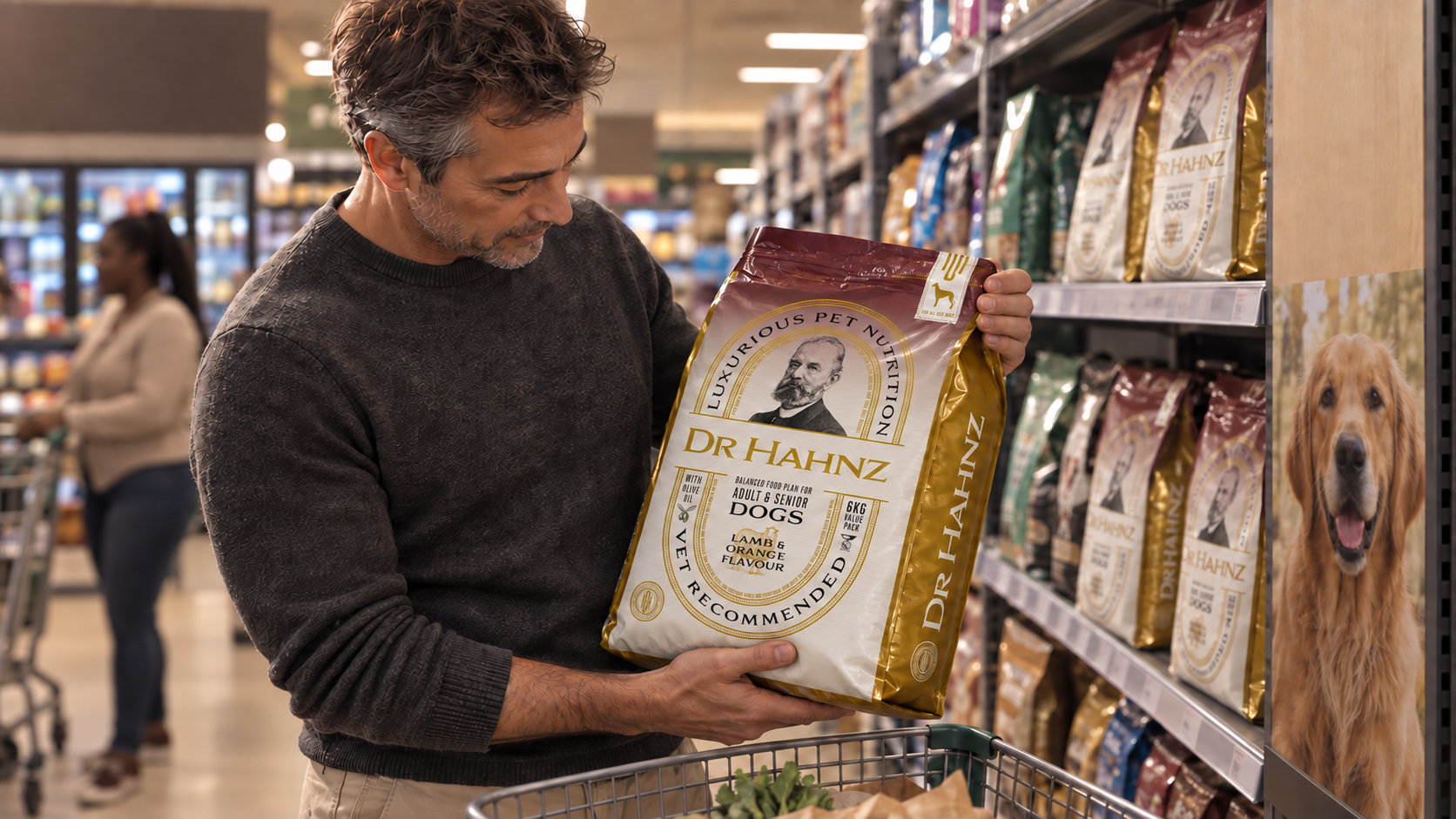
Markus considers a Dr Hahnz bag in a dramatised supermarket scene.

00 · BEFORE THE CHOICE

I care. Because of the bond we share.

I’m Markus. My dog Oscar and cat Luna are family. I care what is in their food.

Come with me

Fictional people, pets and visits.

HOME · SOUTH AFRICA

My dad was a vet.

I grew up around animals. You might think that would make the pet-food aisle easy. Yet there I was, bag in hand, wondering what the numbers and ingredient names really meant for Oscar and Luna.

I did not need to become a nutritionist to ask better questions. I wanted to understand the recipe, what happens during preparation, and what the checks actually tell us. Then I could bring it back to an ordinary decision: what goes in their bowls, and what fits our budget?

Then came a work trip
PICTURE THE IDEAFrom the shelf to the bowl
From the shelf to the bowlCome back to the shelf with me: read the exact pack, understand how the food is prepared, then use its feeding guide. The simple pack, preparation unit and bowl show the route; they explain the idea rather than reproduce artwork or the factory layout.Read theexact packUnderstandpreparationUse itsfeeding guideKeep the exact food in view

Come back to the shelf with me: read the exact pack, understand how the food is prepared, then use its feeding guide. The simple pack, preparation unit and bowl show the route; they explain the idea rather than reproduce artwork or the factory layout.

01 · JUNE · WINTER IN ARGENTINA

Same protein number. Same story?

Illustrative scene accompanying this question.
Dramatised visit

Before a June work trip to Argentina, I arranged a half-day visit to learn about animal-protein ingredients. I arrived with what I thought was a straightforward question: how much protein? It turned into three better ones: which amino acids, how well can they be digested, and will the finished food be something a pet wants to eat? So much for my one-question visit.

More than a percentage

At the shelf, the protein percentage had felt like a handy score. The bigger number wins, right? There is more to it. Proteins supply amino acids: think of them as different building pieces, rather than one identical ingredient. Two protein ingredients can supply a different mix of those pieces. Preparation also affects how well they can be digested and used. The percentage matters; it just cannot tell me the whole story on its own.

PICTURE THE IDEAProtein is a mix of amino acids
Protein is a mix of amino acidsWhen two foods share a protein number, I look closer. Different protein ingredients can bring different amino-acid mixes. These shapes help you see that difference; they are symbols, not recipe amounts.Ingredient AIngredient BAmino acidsDifferent mixes.More to understand.Schematic — no amounts or ranking

When two foods share a protein number, I look closer. Different protein ingredients can bring different amino-acid mixes. These shapes help you see that difference; they are symbols, not recipe amounts.

Different ingredients, different jobs

Then there is the mix of animal tissues. Muscle supplies amino acids; liver contributes nutrients including vitamin A; bone contributes calcium and phosphorus. Each brings something different. Think of a recipe, not a podium: putting one ingredient in first place does not balance the meal. The amounts have to work together in the complete food. More muscle, more liver or more bone is not automatically better, and the names alone do not tell me the amounts in this bag.

PICTURE THE IDEADifferent tissues contribute different nutrients
Different tissues contribute different nutrientsThink of the meat you recognise in a kitchen. Muscle, liver and bone have different jobs in a complete pet-food recipe. I have made the cards equal so you can compare their roles, not amounts.MuscleAmino acidsLiverNutrients includingvitamin ABoneCalcium +phosphorusDifferent jobs within the complete recipe

Think of the meat you recognise in a kitchen. Muscle, liver and bone have different jobs in a complete pet-food recipe. I have made the cards equal so you can compare their roles, not amounts.

Enjoying it and digesting it

And Oscar’s empty bowl? That tells me he enjoyed dinner. It does not hand me a digestibility report. Wanting to eat a food and being able to digest its nutrients are different questions. Both matter. I need evidence about the finished food to understand them; a protein number or an enthusiastic dinner cannot answer both.

PICTURE THE IDEAEnjoyment and digestion are separate questions
Enjoyment and digestion are separate questionsI love seeing Oscar or Luna tuck in. Then I ask what tells me about digestion. Enjoying dinner and digesting it need different evidence; this drawing explains the questions, not a feeding-trial result.Will they enjoy it?How is it digested?Appetite / preference?Nutrient digestionTwo questions. Separate evidence.

I love seeing Oscar or Luna tuck in. Then I ask what tells me about digestion. Enjoying dinner and digesting it need different evidence; this drawing explains the questions, not a feeding-trial result.

WHAT I TAKE BACK TO THE BOWL

Back at the shelf, I still read the protein figure. Then I read the exact composition and ask what supports the finished food. I am choosing dinner for Oscar and Luna, not awarding a trophy to the biggest number.

A closer look: facts, sources and limits

About Dr Hahnz

Each Dr Hahnz recipe has its own composition, developed with an in-house team and external specialists. Argentina is one animal-protein origin across the range. My illustrative visit does not identify a supplier or tell you where every ingredient in a particular recipe comes from.

A useful distinction

I learnt that these names are not interchangeable. AAFCO’s definitions of meat meal and meat-and-bone meal exclude added blood, apart from unavoidable traces. A separately specified blood ingredient has its own protein profile. Neither a tissue name nor a percentage tells me enough about digestion, preference, skin or joint health. Those outcomes need evidence about the finished food.

What this does not establish

I cannot give you Dr Hahnz meat, organ, bone or blood percentages here. I use AAFCO’s US definitions to explain terms, not to certify South African ingredients or products. A picture of animal meal cannot tell me whether blood was added.

MY NEXT QUESTIONAnd the olive oil—what is its job in the recipe?

02 · AUGUST · SUMMER IN SPAIN

Olive oil. Lovely ingredient. But what does it do?

Illustrative scene accompanying this question.
Dramatised visit

Two months later, we were in Spain on a family holiday. I had arranged one afternoon in an olive grove. One afternoon, I promise; the rest was family time. It was August, so the olives were still growing and the mill was waiting for harvest. A lovely place to ask a very ordinary question: what is this oil actually doing in pet food?

A job in the recipe

I knew olive oil from our kitchen. That did not mean I understood its job in Oscar and Luna’s food. Dietary fat supplies energy, contributes to texture and helps the body absorb vitamins A, D, E and K. There is a real nutritional role behind the attractive ingredient name. Its value depends on the amount and how it fits with everything else in the complete recipe.

PICTURE THE IDEAThe jobs of dietary fat
The jobs of dietary fatI knew olive oil from our kitchen. Dietary fat supplies energy, adds texture and helps the body absorb vitamins A, D, E and K. For their meal, I look at its amount and place in the complete recipe.Dietary fatA D E KEnergyTextureVitamin absorptionA, D, E + KAmount + the whole recipe matter

I knew olive oil from our kitchen. Dietary fat supplies energy, adds texture and helps the body absorb vitamins A, D, E and K. For their meal, I look at its amount and place in the complete recipe.

Origin is one part of the story

Here is the useful distinction: “from Spain” tells me where the oil comes from. It does not tell me its grade or prove a particular health benefit. A passport is not a nutrition report. And more oil is not automatically better. I follow the finished food’s feeding guide rather than treating a familiar kitchen ingredient as a reason to add an extra drizzle.

PICTURE THE IDEAOrigin is one part of the recipe story
Origin is one part of the recipe storySpain tells me where the oil comes from. Its grade or a claimed health benefit needs more information than a country name on its own.Where from?SpainThe whole recipeOil + other ingredientsOrigin alone is not a health claim

Spain tells me where the oil comes from. Its grade or a claimed health benefit needs more information than a country name on its own.

WHAT I TAKE BACK TO THE BOWL

Spanish olive oil is included in every Dr Hahnz wet and dry food. I look at its place in the whole recipe, then use the feeding guide for the exact pack. One interesting ingredient can start a good question; the complete food has to answer it.

A closer look: facts, sources and limits

About Dr Hahnz

Here is the fact I bring back to the pack: Spanish olive oil is included in every Dr Hahnz wet and dry food. In dry food, it goes in during vacuum coating, after drying. That timing does not describe wet-food manufacture.

What this does not establish

The oil is described as refined olive oil or an olive-oil blend; I do not have its exact specification or quantity here. “Spanish” does not establish an extra-virgin grade, polyphenol level, omega-3 benefit or skin or joint outcome. This fictional grove is not a verified supplier. August means developing olives and an idle mill before harvest.

MY NEXT QUESTIONSo how do those ingredients become the food in the bag?

03 · SOUTH AFRICA · MAKING DRY FOOD

Good ingredients. Then what?

Illustrative scene accompanying this question.
Process illustration

Back in South Africa, I arranged a visit to follow the next part of the story: what happens between the ingredients and the bag? The factory-floor scene here illustrates the equipment and workflow. The explanation below is my look back at the process, not a conversation recorded over the machinery.

Ingredients are the beginning

I had thought a lot about what went into the food. Then I thought about making a potjie: the shopping basket is only the beginning. Cutting the vegetables, following the order and controlling the cook change what reaches the table. That gave me a better factory question: what is each stage there to do? I am borrowing the idea of careful preparation, not suggesting Oscar or Luna should eat our seasoned potjie.

PICTURE THE IDEAIngredients are the beginning
Ingredients are the beginningA braai and a potjie remind me that the same ingredients can be prepared differently. I use that familiar idea to ask about pet food. This diagram explains the idea rather than comparing measured product results.IngredientsPreparationSame starting pointDifferent preparation can change the finished food

A braai and a potjie remind me that the same ingredients can be prepared differently. I use that familiar idea to ask about pet food. This diagram explains the idea rather than comparing measured product results.

Each stage has a job

I follow the jobs in order: prepare and mix the batch, then grind its particles for cooking. Heat and moisture prepare the mixture; extrusion cooks and forms it; drying controls moisture. Turning every control up to “more” is no recipe. I want to know whether the conditions suit the ingredients and the food being made, and how that is checked.

PICTURE THE IDEAEach preparation stage has a purpose
Each preparation stage has a purposeLet me group a few jobs: preparing particle size, adding heat and moisture, forming the food and controlling moisture. These four ideas make the process easier to follow, but they sit within the full eleven-stage dry-food sequence.Different jobs. One process.GrindHeat +moistureShapeDrySelected purposes — see all eleven stages below

Let me group a few jobs: preparing particle size, adding heat and moisture, forming the food and controlling moisture. These four ideas make the process easier to follow, but they sit within the full eleven-stage dry-food sequence.

What I want the checks to tell me

Dr Hahnz dry food follows eleven confirmed stages, from receiving ingredients to packing the food. Following the order helped me join the dots. A polished machine or a neat-looking kibble can look reassuring, but appearance does not prove the result. I want to understand what is controlled at each step and what happens if a required check is not met.

PICTURE THE IDEAA check must lead to a decision
A check must lead to a decisionFollow with me: a sample, a suitable check, then a decision based on the result. Impressive equipment gives us context; the actual result tells us about the batch.What follows the result??SampleCheckDecisionA method is not a particular batch report

Follow with me: a sample, a suitable check, then a decision based on the result. Impressive equipment gives us context; the actual result tells us about the batch.

WHAT I TAKE BACK TO THE BOWL

Now I can follow the process without needing a machine manual. What does this step change? Why does that matter to the food? And how is it checked? Those are the questions I take back to the bag.

A closer look: facts, sources and limits

About Dr Hahnz

Let me put the route in order. Gourmet makes Dr Hahnz in South Africa. Its dry food follows receiving, batch preparation, batch mixing, milling, pulverising, preconditioning, extrusion, drying, vacuum coating, cooling and packaging. Those eleven steps show me which job happens when.

What this does not establish

I use this scene to explain the process, not to establish exact temperatures, particle sizes, processing times, machinery specifications or nutrient results. These eleven stages describe dry food, not wet-food manufacture.

Follow all eleven stagesMY NEXT QUESTIONWhat is happening inside that little kibble?

04 · COOKING · THEN DRYING

A small kibble. Quite a journey.

Illustrative scene accompanying this question.
Process illustration

A kibble is small enough to disappear under the fridge. Quite a lot happens before it reaches Oscar’s bowl, though. This was the part that helped me connect the ingredient list with the finished food.

Cooking and shaping

Extrusion uses heat, moisture, pressure and mechanical work to cook and shape the mixture. I think of the attention I give a braai: the heat matters, but so does what I am cooking and how I handle it. The factory has its own controls; it is not a braai inside a machine. The comparison reminds me why “hotter” or “finer” alone cannot promise a better result for every food.

PICTURE THE IDEASeveral controls work together in extrusion
Several controls work together in extrusionHere is what I follow: heat, moisture, pressure and mechanical work change the mixture as it cooks and forms. The drawing explains those influences; actual settings, temperatures and results need their own records.HeatMoisturePressureMechanical workCook + shapeControls together — not machine settings

Here is what I follow: heat, moisture, pressure and mechanical work change the mixture as it cooks and forms. The drawing explains those influences; actual settings, temperatures and results need their own records.

Where the oil comes in

After forming, the kibble travels through a closed pneumatic duct to drying. It is carried by air through an enclosed route. Later, after drying, Spanish olive oil is added during vacuum coating. Pressure changes help the liquid enter the kibble’s pores—little spaces within its structure. That explains how oil gets into a kibble. It is a different question from how well Oscar or Luna absorbs nutrients after eating it.

PICTURE THE IDEAAir carries kibble through a closed duct
Air carries kibble through a closed ductThis detail helped me: the manufacturer confirms that food travels from extrusion to drying through an enclosed air-transfer route. The drawing lets you follow that route; it does not reproduce the measured factory layout.Carried by airExtrusionDryingClosed ductIllustrative route — no open conveyor

This detail helped me: the manufacturer confirms that food travels from extrusion to drying through an enclosed air-transfer route. The drawing lets you follow that route; it does not reproduce the measured factory layout.

The question after the tour

By then, I understood more than the order of the machines. But I still had one question: what happens when a required check fails? A tour can show me a process. The decision about an ingredient lot or finished batch tells me what that check is there for.

WHAT I TAKE BACK TO THE BOWL

A tidy little triangle tells me its shape. Understanding the process and its checks tells me more about how the food is made. I want both a clear explanation and a clear decision when something does not meet the required check.

A closer look: facts, sources and limits

About Dr Hahnz

Three manufacturer-confirmed details connect the steps for me: air carries kibble from extrusion to drying through a closed duct; Spanish olive oil goes in during vacuum coating after drying; and an ingredient lot or finished batch failing a required check is rejected, not released or reworked.

What this does not establish

I would not read more into the illustration than it shows. The duct route is illustrative, not a feeding trial, digestibility result, nutrient-retention percentage or proof of a validated pathogen kill step. What a method can do and what a batch achieved are separate questions.

MY NEXT QUESTIONAnd if a required check fails—what happens next?
Illustration of added liquid entering pores in dried kibble during vacuum coating.ADDED OILPORESDRIED KIBBLE
Illustration of the principle · Not to scale

A LITTLE CLOSER

Where does the oil go?

Look closer with me. Dried kibble has small spaces inside. During vacuum coating, pressure changes help added liquid enter those pores. This is where Spanish olive oil joins Dr Hahnz dry food, after drying.

That answers how oil gets into the kibble. What Oscar or Luna absorbs after eating is another question; I need evidence about the finished food to answer it.

Explore the principle at your own pace.

05 · THE CHECKS

What does a test actually tell me?

I can admire an impressive machine without knowing what it tells me. So I ask three things: what was sampled, what was the test looking for, and what decision follows the result? Here is what each kind of check can help explain.

Bruker TANGO

Does what is in the sample match what is expected?

Near-infrared analysis checks the sample’s composition against what is expected. I think of comparing prepared ingredients with the right recipe sheet. The instrument works differently, but it also needs the right reference: an applicable calibration for the material being checked. Without that, I cannot read much into the comparison.

I find that useful because it asks whether the contents meet the recipe’s requirements. It tells me something about the sample. It does not directly measure what Oscar or Luna absorbs after dinner; for that, I need a different kind of evidence.

PICTURE THE IDEAFrom sample to composition
From sample to compositionI start with the sample and a calibration that fits the comparison. Calibration is what connects the measurement to a composition comparison. These marks help you follow the idea; they are not measured values.SampleApplicablecalibrationCompositioncomparisonAn illustration of the check, not a batch result

I start with the sample and a calibration that fits the comparison. Calibration is what connects the measurement to a composition comparison. These marks help you follow the idea; they are not measured values.

Method and limits

The manufacturer confirms on-site use. I do not have the exact calibration, validation, sampling frequency or batch results here, so I cannot present those as verified.

Raptor

What can the eye miss?

Mycotoxins are toxins some moulds produce. I cannot tell whether they are present by looking at the food. A selected assay—a test for a particular target—looks for the toxin it covers. I need to know the test and sample type to understand the result.

I think of it as asking a precise question, rather than simply asking “all good?” I want to know which toxin was checked. One result is not an answer about every possible toxin or every part of the food.

PICTURE THE IDEAA test with a particular target
A test with a particular targetWith a toxin test, I ask what it looks for. Each chosen test targets a particular toxin in a suitable sample. The shapes help you follow that idea; they are symbols, not chemical structures or results.Suitable sampleSelectedassaySpecifiedtoxinOne defined target, not every toxin

With a toxin test, I ask what it looks for. Each chosen test targets a particular toxin in a suitable sample. The shapes help you follow that idea; they are symbols, not chemical structures or results.

Method and limits

The manufacturer confirms on-site Raptor use. I link the aflatoxin instructions as a method example, not proof of the exact kit, every-batch testing or a product free of all toxins.

Molecular Detection System

Was the particular organism being tested for detected?

A pathogen is an organism that can cause disease. I ask which one the selected test looks for in a suitable sample. Sampling and method determine what the answer means; one test cannot declare every possible pathogen absent.

My next question is what happens after the result. The manufacturer confirms that a failing ingredient lot or finished batch is rejected, not released or reworked. I can explain that policy to you. A photograph of the equipment still cannot show that a particular batch passed.

PICTURE THE IDEAA defined organism, sample and method
A defined organism, sample and methodFollow a suitable sample through a test for a specified organism with me. Knowing the organism, sample and method keeps the question clear. This drawing explains the route rather than reporting an actual batch result.SampleSelected organismand methodDefinedresultThe sample and method define the answerA focused check does not establish sterility

Follow a suitable sample through a test for a specified organism with me. Knowing the organism, sample and method keeps the question clear. This drawing explains the route rather than reporting an actual batch result.

Method and limits

The manufacturer confirms the rejection policy and on-site system. Exact test selection, sampling frequency and individual batch outcomes are not verified here. I use the Salmonella instructions as a method example, not a Dr Hahnz batch report.

And if a required check fails?

The manufacturer confirms that an ingredient lot or finished batch that fails a required check is rejected, not released or reworked. These method references are not individual batch reports.

PICTURE THE IDEAA failed required check means rejection
A failed required check means rejectionIf a required check fails, what happens next? The manufacturer confirms that the ingredient lot or finished batch is rejected. I want that distinction clear: it is not released or reworked.Ingredient lot or finished batchRequired checkFailsRejectedNo releaseNo reworkingPolicy shown — not a batch test result

If a required check fails, what happens next? The manufacturer confirms that the ingredient lot or finished batch is rejected. I want that distinction clear: it is not released or reworked.

Bring it back to the choice

06 · BACK TO THE BOWL

Back to the shelf. Better questions.

Oscar and Luna do not need me to memorise a factory tour. They need me to choose food intended for them, read the exact recipe and follow its feeding guide. I also compare the cost of the daily portion, because caring for them has to work in everyday life.

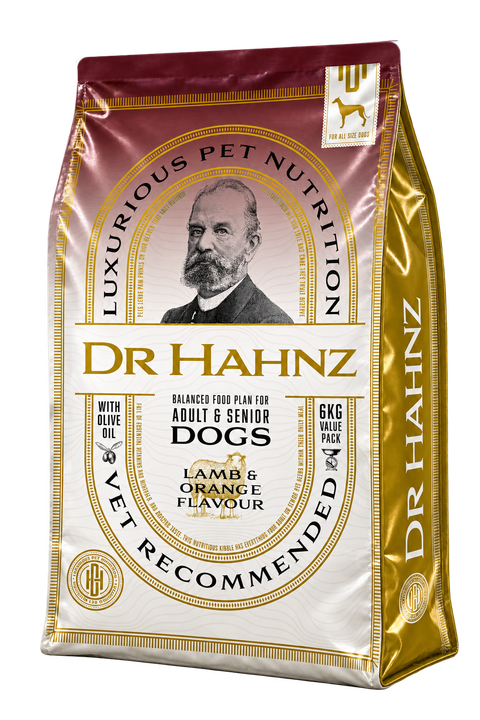
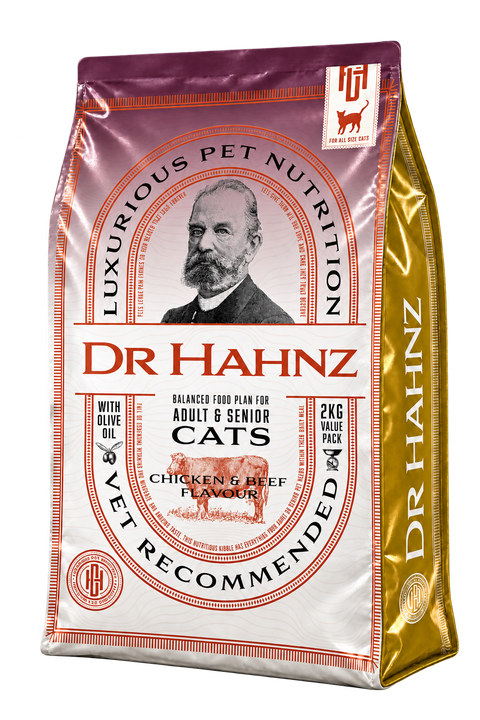
A flavour name describes a flavour profile, not necessarily a named whole ingredient. Check the composition and feeding information for the exact pack.

PICTURE THE IDEABring the choice back to the pet
Bring the choice back to the petI start with Oscar or Luna: the right species and life stage, then the exact pack. Read its composition with me and use that food’s feeding guide. The choice comes back to your pet.Pet +life stageExactpackRead thecompositionUse thefeeding guide

I start with Oscar or Luna: the right species and life stage, then the exact pack. Read its composition with me and use that food’s feeding guide. The choice comes back to your pet.

BACK TO EVERY DAY

What does
a day cost?

Then I did the sums. Choose a food and a weight range from its feeding guide to estimate a day’s portion cost.

See this exact pack
PICTURE THE IDEAHow daily portion cost is estimated
How daily portion cost is estimatedHere is how I estimate daily portion cost: divide pack price by pack mass, then multiply by the printed daily portion. Keep both amounts in the same unit, such as grams. The drawing explains the calculation without invented example values.Pack pricePack mass×Printed dailyportion=DailycostUse matching mass units · keep the printed rangeAn estimate for the exact selected pack

Here is how I estimate daily portion cost: divide pack price by pack mass, then multiply by the printed daily portion. Keep both amounts in the same unit, such as grams. The drawing explains the calculation without invented example values.

CARE CONTINUES

When the bag comes home.

Keep the exact pack information close, follow its feeding and storage directions, and make the next order easier.

PICTURE THE IDEACare continues when the food comes home
Care continues when the food comes homeWhen the food comes home, I keep the pack information handy. It gives you that food’s feeding and storage directions, and helps you find the same product when it is time to reorder.Keep thepack informationFollow feedingand storageFind thesame foodThe exact label stays your reference

When the food comes home, I keep the pack information handy. It gives you that food’s feeding and storage directions, and helps you find the same product when it is time to reorder.

PICTURE THE IDEATwo formats, one daily intake
Two formats, one daily intakeIf I combine dry and wet food, both count towards the day’s intake. I do not add a full dry ration to a full wet ration. Follow the chosen foods’ guidance and get professional help with the combination when needed. These symbols explain the idea; their sizes do not set a mixing ratio.Dry foodWet foodOne daily intake

If I combine dry and wet food, both count towards the day’s intake. I do not add a full dry ration to a full wet ration. Follow the chosen foods’ guidance and get professional help with the combination when needed. These symbols explain the idea; their sizes do not set a mixing ratio.